


![【香川】青峰山 千手院「根香寺(ねごろじ)」の紅葉 – [Kagawa] Autumn leaves of Negoroji temple](https://yousakana.jp/wp-content/uploads/2020/11/Autumn-leaves-of-Negoroji-temple-800x534.jpg)
![【香川】仏生山のスパイス系カレー『ヒッカリー』 – [Kagawa] Spicy curry “hiccurry” at Busshozan](https://yousakana.jp/wp-content/uploads/2019/11/hiccurry_curry-busshozan-800x534.jpg)
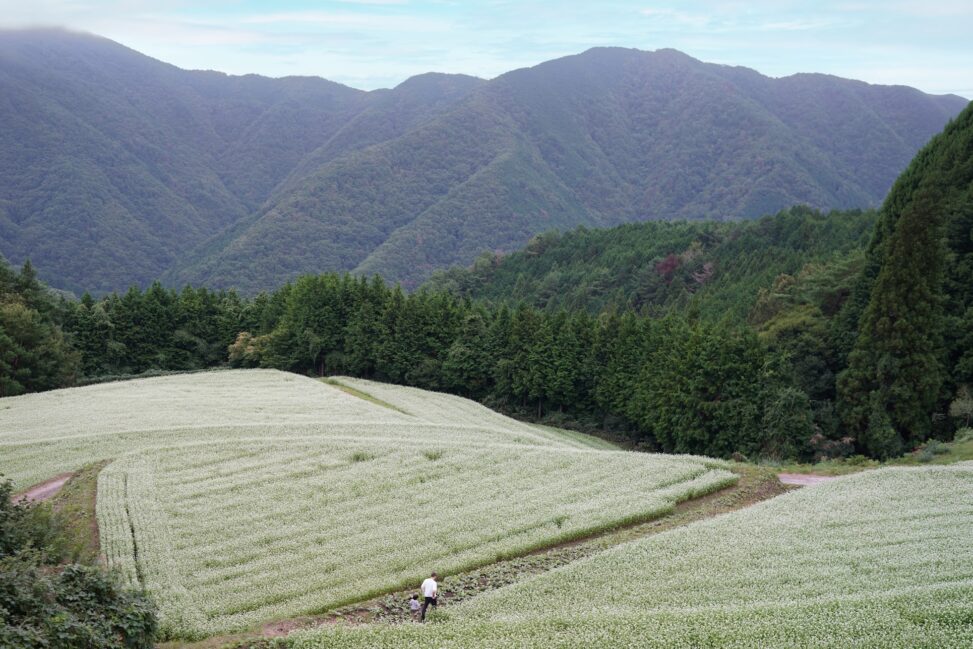
島ヶ峰のそば畑――山の暮らしがつくる文化的景観
The Buckwheat Fields of Shimagamine—A Cultural Landscape Shaped by Mountain Life
香川県まんのう町川東の島ヶ峰。標高約900mの山あいに、秋になると白いそばの花が一面に広がります。標高800~900mの冷涼な環境と大きな寒暖差、斜面の水はけのよい畑は、そば栽培に適した条件です。かつてここは、川東村の人々が共同で柴草を刈る「入会山」でした。明治以降は下草刈りや炭焼きに利用され、戦後には約43haが開墾されて牧場となり、その後、高冷地キャベツの畑へと姿を変えました。やがて荒廃した土地を、2016年頃から地域の人々が再び開墾し、そば畑として再生しています。
Shimagamine in Kawahigashi, Mannō Town, Kagawa Prefecture. In autumn, white buckwheat flowers spread across the valley at an altitude of approximately 900 metres. The cool climate at altitudes of 800–900 metres, the significant temperature fluctuations, and the well-drained sloping fields provide ideal conditions for buckwheat cultivation. This area was once a ‘community mountain’ where the people of Kawahigashi Village would gather to cut firewood and grass collectively. From the Meiji period onwards, it was used for clearing undergrowth and charcoal burning; after the war, approximately 43 hectares were cleared and turned into pasture, before later being converted into fields for high-altitude cabbage cultivation. Around 2016, local residents began reclaiming the land, which had fallen into disuse, and are now revitalising it as buckwheat fields.
島ヶ峰
住所:香川県仲多度郡まんのう町川東 [Google Map]
開花:9月上旬〜10月上旬頃
電話:0877-84-2111(まんのう町美合出張所)
Shimagamine
Address: Kawahigashi, Man’nou Town, Nakatado District, Kagawa Prefecture [Google Map]
Flowering season: Early September to early October
Telephone: 0877-84-2111 (Manno Town Miai Branch Office)
2026/09/21


入会山(いりあいやま)とは、村や集落の人々が、共同で山の資源を利用する権利を持っていた山のことです。「みんなの山」という意味に近いですが、単純に所有権を共有していたとは限りません。多くの場合、山の所有者とは別に、地域の人々が昔から認められてきた入会権にもとづいて利用していました。
何に使ったのか 代表的なのは、
* 薪・柴 → 燃料
* 草 → 牛馬の飼料
* 刈敷(かりしき) → 田畑の肥料
* 落ち葉 → 堆肥
* 炭焼き → 木炭の生産
* 山菜・木の実など → 食料
An ‘Iri-ai-yama’ (Iri-ai Mountain) refers to a mountain where the people of a village or hamlet held the right to use its resources collectively. Whilst this is similar in meaning to ‘everyone’s mountain’, it does not necessarily imply that ownership was shared. In many cases, the local people utilised the mountain based on ‘iri-ai’ rights—which had been recognised since ancient times—separate from the mountain’s actual owner.
What were these resources used for? Typical examples include:
* Firewood and brushwood → Fuel
* Grass → fodder for cattle and horses
* Mown grass (karishiki) → fertiliser for rice paddies and fields
* Fallen leaves → compost
* Charcoal burning → production of charcoal
* Wild vegetables, nuts, etc. → food
つまり、昔の農村では、山の草木が、家畜の飼料や燃料、肥料として利用され、それが田畑を支え、作物となって人々の暮らしを支えるという、自然資源の循環がありました。そのため入会山は、農村の生活を支える共同の資源供給地だったのです。 島ヶ峰の場合 島ヶ峰については、旧琴南町の資料などに、川東の集落が利用する「入会の野山」「柴草刈場」としての歴史が記録されています。つまり島ヶ峰では、時代によって作物や土地利用は変わっても、山を地域の暮らしに組み込んで利用するという関係そのものは続いてきたと見ることができます。
In short, in rural communities of the past, there was a cycle: mountains → vegetation → livestock, fuel and fertiliser → fields and farmland → crops → people’s livelihoods. Consequently, the communal mountains served as a shared source of resources that underpinned rural life. The case of Shimagamine: Regarding Shimagamine, records from the former Kottō Town and other sources document its history as ‘communal hills and fields’ and ‘firewood and fodder gathering grounds’ utilised by the Kawahigashi settlement. In other words, whilst the crops and land use at Shimagamine may have changed over time, it can be seen that the fundamental relationship of integrating the mountains into and utilising them for the local way of life has continued.


唐箕(とうみ)。風の力を利用して、収穫した穀物(米・麦・大豆・そばなど)と、ごみや籾殻(もみがら)、藁(わら)くずなどを選別するための伝統的な農具(穀物選別機)です。
A wind sifter. This is a traditional agricultural implement (grain separator) that utilises the power of the wind to separate harvested grains (such as rice, wheat, soya beans and buckwheat) from debris, husks and straw fragments.


調整器左へ送ル程選別良クナリマス
The more you move the adjuster to the left, the better the sorting becomes.


そばの花。ソバはタデ科ソバ属の一年草で、中国西南部(雲南省からヒマラヤ地方)を原産とする植物です。種をまいてから約30日ほどで花が咲き、2〜3か月ほどで収穫できる非常に成長が早い植物です。寒冷な気候や痩せた土地(やせ地)でもよく育つため、昔から「救荒植物(飢饉に備える作物)」として重宝されてきました。初秋(または夏)に、直径6ミリほどの白い小さな花をたくさん咲かせます。花びらではなく、白い花びらのように見えるのは「萼(がく)」です。また、受粉のために虫を呼ぶ独特な香りを持っています。雌しべの長い花と短い花があり、別の株の花粉と結びつくことでしか実をつけないため、昆虫などの働きが欠かせません。実(果実)の中心部分からそば粉を作り、麺(そば)などに加工して食用にします。

Buckwheat flowers. Buckwheat is an annual plant belonging to the genus Fagopyrum in the Polygonaceae family, native to south-western China (from Yunnan Province to the Himalayan region). It is a very fast-growing plant, flowering approximately 30 days after sowing and ready for harvest in about two to three months. As it thrives even in cold climates and on poor soil, it has long been valued as a ‘famine-relief crop’ (a crop grown to prepare for famine). In early autumn (or summer), it produces numerous small white flowers, each about 6 millimetres in diameter. These are not petals, but the ‘calyx’, which resembles white petals. It also has a distinctive scent that attracts insects for pollination. There are flowers with long pistils and those with short pistils; as the plant can only bear fruit by receiving pollen from another plant, the role of insects is indispensable. Soba flour is made from the centre of the fruit and processed into noodles (soba) and other foods for consumption.
そば畑 頂上。標高930m。島ヶ峰の原風景を守る会
Soba Field, Summit. Altitude: 930 metres. The Association for the Preservation of the Original Landscape of Shimagamine


イノシシ除けフェンス


島ヶ峰そば | 香川県まんのう町観光情報 まんのう元気プロジェクト
まんのう「そば生産振興会」
2016年より私たち、まんのう「そば生産振興会」は、そばづくりに適した標高800メートルを超える寒暖差の大きい、天空の地まんのう町「島ヶ峰」を再び再生し、この地の食文化や風景を「次世代に残したい」そんな想いで、荒廃地の開墾から始め、「島ヶ峰そば」が誕生しました。島ヶ峰そばが町の特産品になるよう本格的に活動しています。そばの花
9月中旬には、雄大な讃岐山脈を望む島ヶ峰の傾斜地に白い綿毛のような、そばの花が揺れる景色を楽しめます。この時期に開催する「そばの花見の会」には、そばの花を一目見ようと大勢の方が訪れ、そばの振る舞いなども行われています。島ヶ峰の歴史
かつて島ヶ峰は、スキー場としての計画なども有りましたが、その後、畜産振興を図る目的で牧場に、また、牧場をキャベツ畑に再開発させました。しかし、衰退しこの地は荒地になっていきました。そば粉の販売
清流の里やインターネットで島ヶ峰のそば粉の販売をしています。
島ヶ峰ソバ畑|スポット・体験|香川県観光協会公式サイト – うどん県旅ネット
標高が高くて寒暖差の大きいところでおいしく育つソバ。標高800mにある島ヶ峰はソバ栽培の適地で、昔から葉タバコの裏作としてソバ栽培が行われています。見ごろになると、雄大な讃岐山脈を望む傾斜地に白い綿毛のようなソバの花が揺れる景色を楽しめます。同地区では、8月から11月までソバの栽培体験を実施しており、地元農家の指導で8月のうね作り・種まきから11月の脱穀作業まで、計4回の作業を体験できます。栽培体験のほか、ソバ打ち体験もできます。詳しくは、まんのう町グリーン・ツーリズム推進協議会(同町美合出張所、TEL:0877-84-2111)まで。
コメントを残す