


![【淡路島 日本遺産】沖ノ島古墳 – [Japan Heritage of Awajishima island] Okinoshima Ancient Tomb, Awajishima island](https://yousakana.jp/wp-content/uploads/2021/07/Okinoshima-Ancient-Tomb_Awajishima-island-800x533.jpg)
![【高知】夜の牧野植物園 – [Kochi] Night botanical garden of Makino](https://yousakana.jp/wp-content/uploads/2016/08/nightmakino-800x536.jpg)

![【香川】彫刻家『流政之』 – [Kagawa] Sculptor Masayuki Nagare](https://yousakana.jp/wp-content/uploads/2019/04/nagare_matakimai-1-800x534.jpg)
佐料編笠神楽(さりょうあみがさかぐら)
鬼無(きなし)に受け継がれる、農村の神楽
Saryō Amigasa Kagura. The Rural Kagura Passed Down in Kinashi
香川県高松市鬼無(きなし)町佐料(さりょう)に伝わる「佐料編笠神楽(さりょうあみがさかぐら)」は、地域の人々によって受け継がれてきた民俗芸能です。香川県の資料では、約200年前から伝承されてきたとされ、五穀豊穣や地域の安寧を願って奉納されてきました。
The “Saryō Amigasa Kagura,” a folk art passed down in Saryō, Kinashi-chō, Takamatsu City, Kagawa Prefecture, is a folk art form that has been preserved by the local community. According to records from Kagawa Prefecture, it has been passed down for approximately 200 years and has been performed as an offering to pray for a bountiful harvest of the five grains and the peace and well-being of the community.
佐料編笠神楽
住所:香川県高松市鬼無町佐料地区奥津神社 佐料公会堂 [Google Map]
日程:9月22日(毎年秋分の日の前夜)付近の土曜日に開催
Saryo Hachigami Kagura
Address: Okutsu Shrine, Saryo District, Onimachi, Takamatsu City, Kagawa Prefecture; Saryo Public Hall [Google Map]
Date: Held on the Saturday closest to 22 September (the eve of the Autumnal Equinox each year)
2026/09/19
香川県高松市鬼無(きなし)町佐料(さりょう)、奥津神社


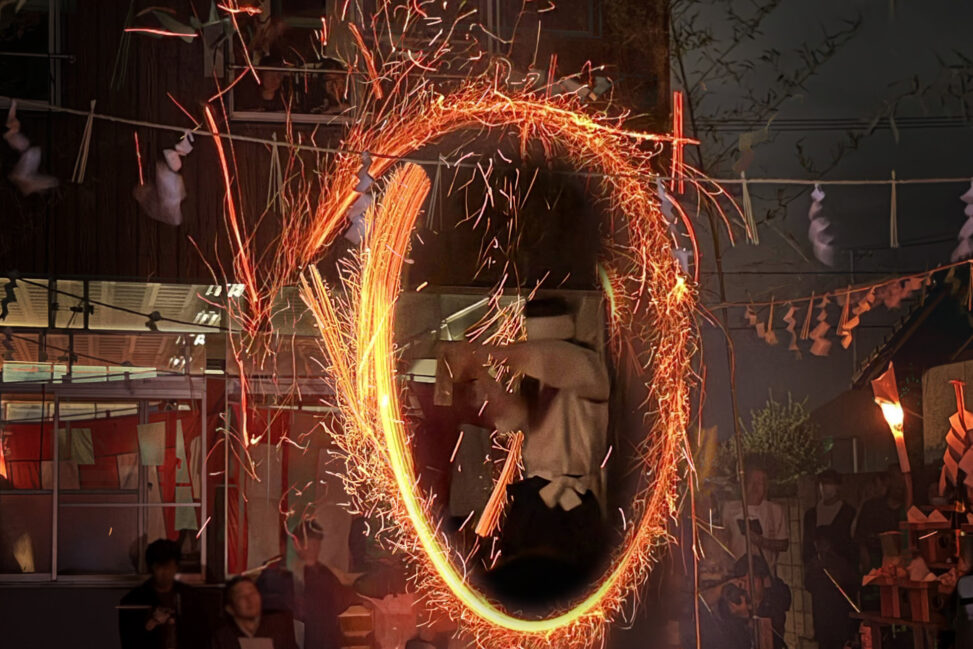
「編笠神楽」という名前は、舞手が農作業に使う編笠を、神職がかぶる烏帽子に見立てて舞うことに由来します。つまり、特別な神職だけが演じる神楽ではなく、農村の暮らしの中にある道具と、人々自身の身体によって演じられてきた神楽なのです。現在伝えられている演目は、「神の舞」「相舞」「ほうき」「塩振り」「四方切り」「弓の舞」「からすの舞」「岩戸の舞」「両刀」「猩々の舞」「剣の舞」「ダイバ(大火)」「上殿さん」「四人兄弟」「長刀」の15演目です。
The name ‘Amigasa Kagura’ derives from the fact that the dancers use the straw hats (amigasa) worn for farm work, likening them to the eboshi hats worn by Shinto priests. In other words, this is not a form of kagura performed exclusively by specialised Shinto priests, but rather one that has been performed using tools from rural life and the dancers’ own bodies. The 15 pieces currently passed down are: ‘The Dance of the Gods’, ‘The Pair Dance’, ‘The Broom’, ‘The Salt-Scattering’, ‘The Four-Directions Cut’, ‘The Bow Dance’, ‘The Crow Dance’, ‘The Iwato Dance’, ‘The Twin Swords’, ‘The Shōjō Dance’, ‘The Sword Dance’, ‘Daiba (Great Fire)’, ‘The Lord of the Upper Hall’, ‘The Four Brothers’ and ‘The Long Sword’.


相舞

ほうきの舞


塩振り


弓の舞


岩戸の舞

佐料編笠神楽を見ていて興味深かったのが、「伝統は変わらないものではない」ということ。高松市の公式情報では、奉納日は「毎年秋分の日の前夜」とされていますが、近年は9月下旬の土曜日に行われるようになっています。2026年は9月19日に奉納されました。また、これまで男の子や男性が中心だった舞の担い手に、近年は女の子も加わっています。2023年には、地元の女子児童が「岩戸の舞」を初めて奉納しました。祭礼の日も、舞う人も、地域社会の変化に合わせて少しずつ変わっている。民俗芸能は、昔の形をそのまま凍結して残すものではなく、変化しながら次の世代へ受け渡されていくものなのかもしれません。約200年続く佐料編笠神楽。その「変わらないこと」だけでなく、「変わり続けていること」にも、伝統の生命力が見えてきます。
The name ‘Amigasa Kagura’ derives from the fact that the dancers use the straw hats (amigasa) worn for farm work, likening them to the eboshi hats worn by Shinto priests. In other words, this is not a form of kagura performed exclusively by specialised Shinto priests, but rather one that has been performed using tools from rural life and the dancers’ own bodies. The 15 pieces currently passed down are: ‘The Dance of the Gods’, ‘The Pair Dance’, ‘The Broom’, ‘The Salt-Scattering’, ‘The Four-Directions Cut’, ‘The Bow Dance’, ‘The Crow Dance’, ‘The Iwato Dance’, ‘The Twin Swords’, ‘The Shōjō Dance’, ‘The Sword Dance’, ‘Daiba (Great Fire)’, ‘The Lord of the Upper Hall’, ‘The Four Brothers’ and ‘The Long Sword’.


猩々の舞


大火(ダイバ)

着火


8月末か9月初めにオオヨセを行い、それから練習にかかる。場所は、佐料公会堂で行う。舞台のこしらえは、当日朝から行う。奉納は夕方からである。
舞には次の種類がある。
(1)神の舞 (2)相舞 (3)ほうき (4)塩振り (5)四方切り (6)弓の舞
(7)からすの舞 (8)岩戸の舞 (9)両刀 (10)猩々の舞 (11)剣の舞
(12)ダイバ(大火) (13)上殿さん (14)四人兄弟 (15)長刀
今行われているのは以上で、この他に山伏という演目があった。鳴物は、笛、太鼓、すり鉦で、他に拍子木を使用することがある。実施主体:佐料編笠神楽保存会
実施日:毎年秋分の日の前夜
実施場所:佐料公会堂
文化財未指定
所在地・伝承地高松市鬼無町佐料地区
祭礼・公開日9月22日
概要地域の子供たちや青年たちによって舞われる神楽で、頭に編笠を烏帽子に代えてつけ舞うことから、編笠神楽と呼ばれる。佐料荒神社境内に特設された神楽庭で、「神の舞」、「相舞」、「ほうきの舞」、「塩振り」、「四方切り」、「弓の舞」、「からすの舞」、「岩戸の舞」、「両刀」、「猩々の舞」、「剣の舞」、「だいば」、「上殿さん」、「四人兄弟」、「長刀」の順に舞われる。参考文献「佐料編笠神楽」香川県民俗芸能連絡協議会『讃岐の民俗芸能』第3版2007
コメントを残す